Drawings That No Longer Match Your Plant
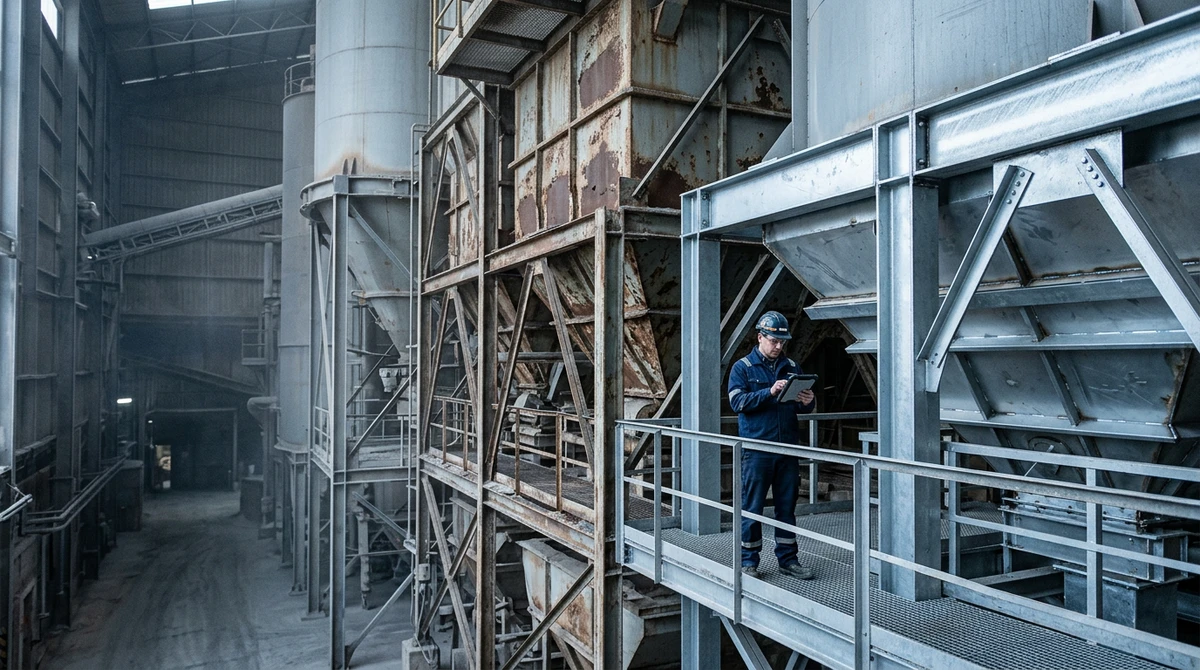
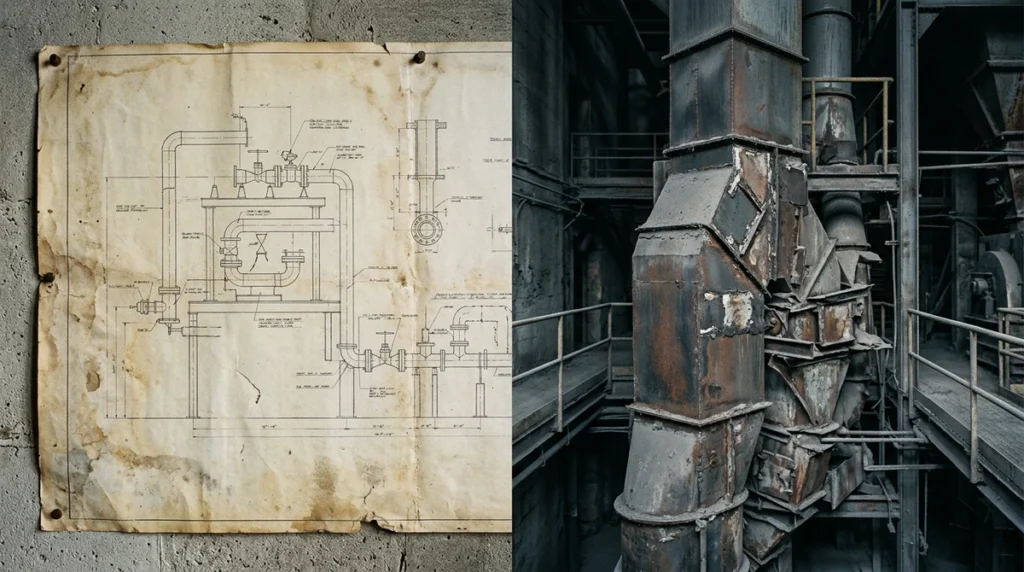
In most cement plants, many of the critical assets have been running for decades: the rotary kiln, preheater cyclones, clinker cooler, raw and cement mills, crushers, bucket elevators, and hundreds of meters of ducts and chutes. Many of them have been modified more than once over the years, and the drawings that exist no longer show what's actually installed on the ground today.
Kiln Shutdowns Leave No Room for Error
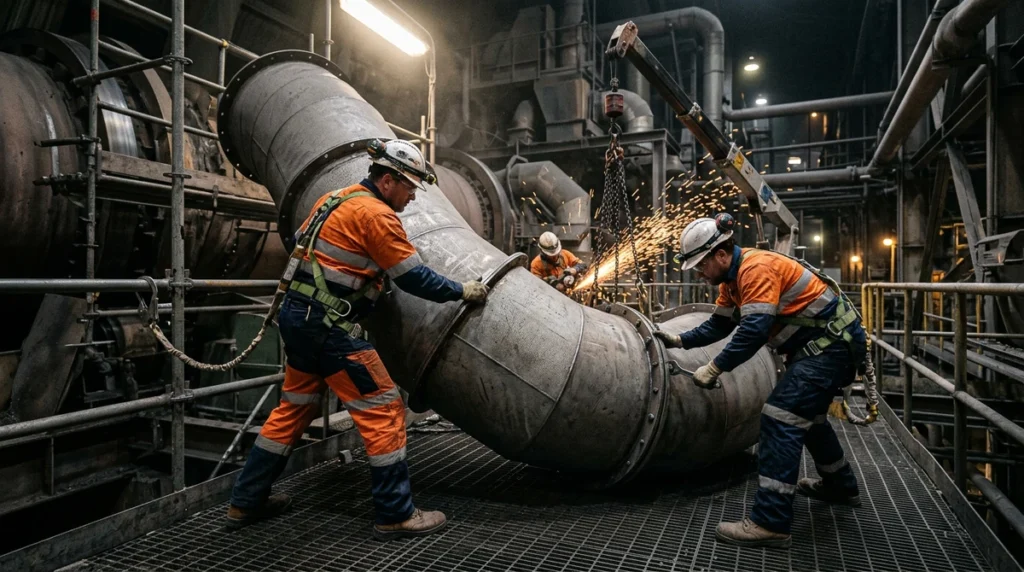
When the kiln shutdown arrives and a chute needs replacing, a duct section has to be swapped out, or a spare part has to be installed, time is the scarcest resource. Taking measurements by hand in dusty, elevated, hard-to-reach areas is slow, risky, and leaves room for error — and a measurement error at that moment costs extra shutdown hours, exactly when every hour counts.
What 3D Scanning Is — and When to Do It
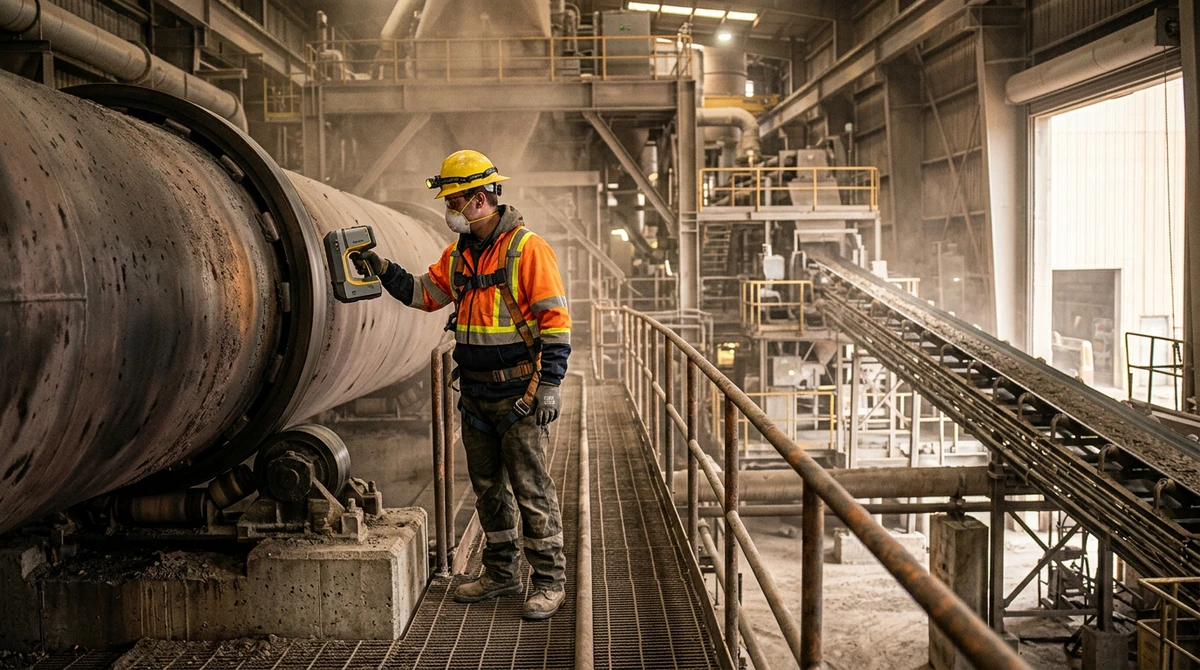
3D scanning — using laser or structured-light technology — captures the real geometry of a piece of equipment, or an entire plant area, in just a few hours, with millimeter-level precision. The result is a point cloud that becomes a digital model that truly matches what's installed today. The ideal approach is to scan before the shutdown: spare parts and modifications get designed and manufactured in advance, based on real measurements, so that during the shutdown all that's left to do is install them.
Less Exposure Time, More Industrial Safety
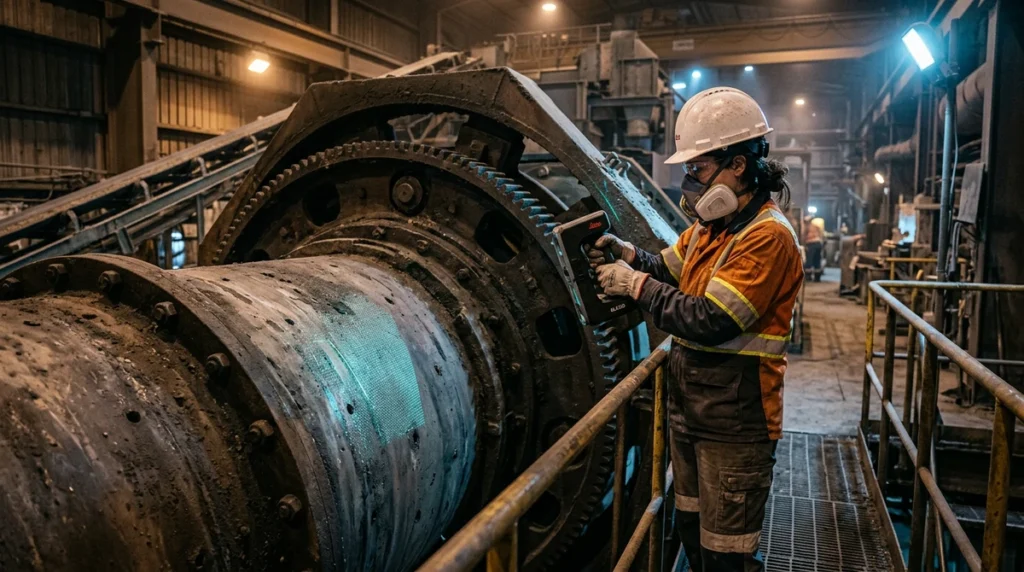
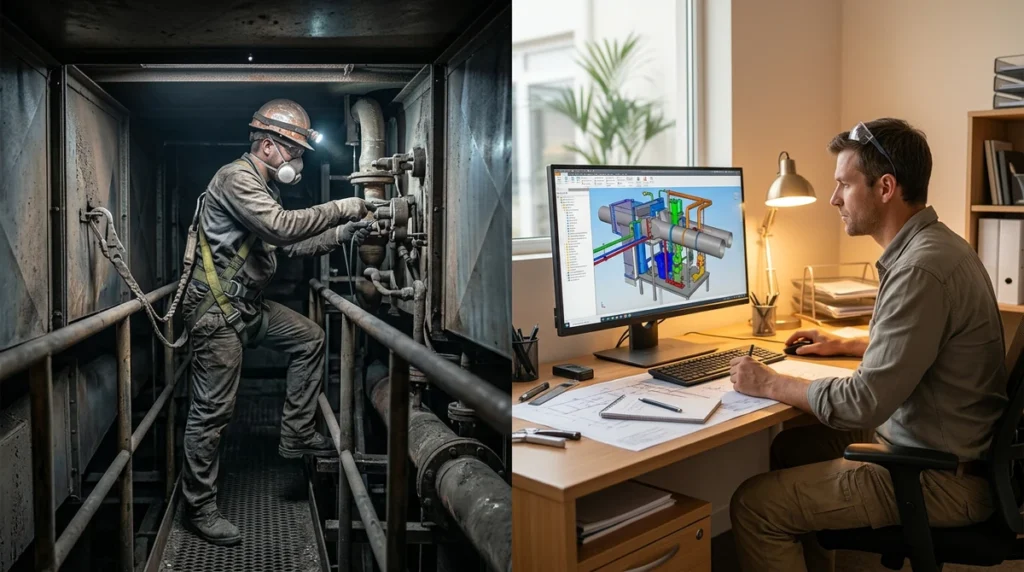
There's also an industrial safety angle. Every manual measurement taken high up on a preheater, inside a duct, or near hot equipment exposes a person to work-at-height, confined-space, or heat hazards. Scanning cuts down that exposure time: everything is captured in a single visit, and any measurement that's missing can be taken later, from a desk, on the digital model — without climbing back up.
What You Receive at the End
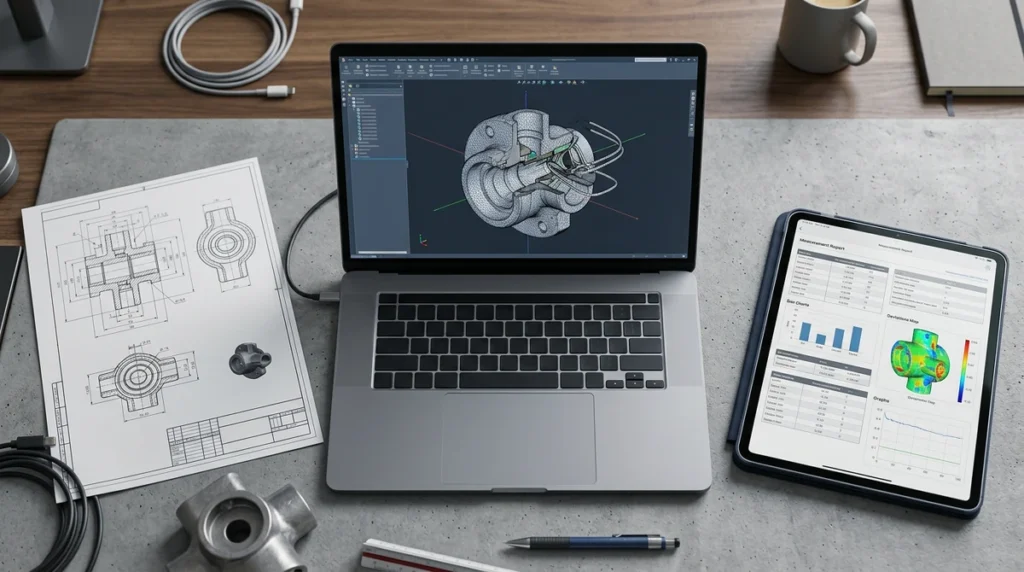
Depending on the project's scope, deliverables include the registered point cloud, the 3D model of the scanned equipment or areas, updated 2D drawings, and a report with the critical measurements — in formats compatible with the most common CAD tools, so your own engineering team can work with them directly.
A Digital Model That Keeps Paying Off
That digital model keeps paying off afterward: it's used for reverse engineering, dimensional control, designing modifications, and planning assembly work, and it stays on file as up-to-date plant documentation. The same logic applies to mining, sugar mills, and agribusiness, where heavy equipment and costly shutdowns present the same challenge.
Conclusion
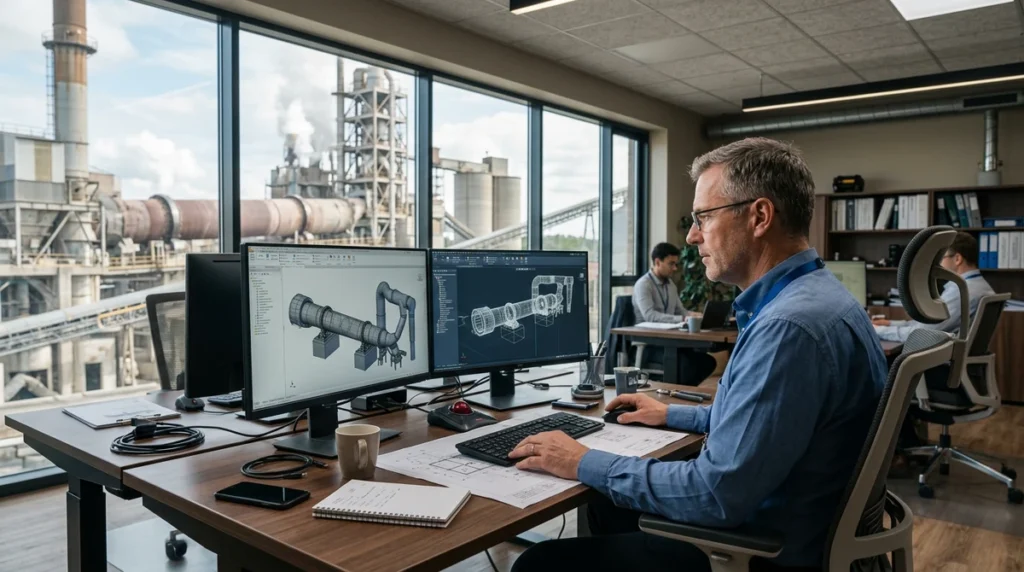
Scanning before the kiln shutdown turns the uncertainty of measuring by hand — at height and against the clock — into a reliable digital model you can design, manufacture, and plan around well in advance. The same logic applies to mining, sugar mills, and agribusiness, where heavy equipment and costly shutdowns present the same challenge.